"AI marketing specialist" is at the stage every new job title passes through, where half the people using it mean something serious and the other half mean they use ChatGPT to write captions. That's a problem if you're hiring, because the gap between those two is the difference between a real competitive advantage and a slightly faster content mill.
This is what the role covers when it's done properly, what the genuinely valuable part of it is in the UAE right now, and the questions that separate the two versions.
What does an AI marketing specialist do?
An AI marketing specialist uses AI systems to do marketing work that previously required a team, and optimises a brand so AI search engines recommend it. The work splits into AI-assisted production, generative engine optimisation, automated lead qualification and routing, and measuring visibility inside AI answers rather than only in Google.
Those two halves are worth separating clearly, because they're different disciplines that happen to sit under one title.
The first half is AI as a production tool. Campaign strategy, ad copy at volume, landing page variants, keyword research, content briefs, competitor analysis, reporting. This is where most of the industry currently stops. It's real value — it genuinely compresses weeks into days — but it isn't defensible. Your competitor has the same tools.
The second half is AI as a channel. Making sure that when someone asks ChatGPT or Perplexity for a recommendation in your category, your business is in the answer. Almost nobody in the UAE is doing this deliberately yet. That's the half that's actually worth hiring for.
Is an AI marketing specialist different from a digital marketing specialist?
Yes, though the overlap is large. A digital marketing specialist runs channels — ads, SEO, email, social. An AI marketing specialist runs those same channels but adds two things: AI systems doing the production work, and optimisation for AI search engines as a distinct visibility channel alongside Google.
It's an extension of the role, not a replacement for it. Someone who understands AI tooling but has never structured a campaign or read a search terms report will build you a very efficient system for producing the wrong marketing. The AI layer sits on top of the fundamentals; it doesn't substitute for them.
| Area | Digital marketing specialist | AI marketing specialist |
|---|---|---|
| Content production | Writes or briefs a writer | Builds a briefed AI workflow, edits the output |
| Search visibility | Google rankings | Google rankings plus citations in AI answers |
| Lead handling | Routes leads to sales | Scores and qualifies before routing |
| Reporting | Manual pulls from GA4 and Ads | Automated, with AI-referred traffic tracked separately |
| Research | Tool-based keyword and competitor work | Same, plus prompt testing across AI platforms |
What is GEO, and how is it different from SEO?
SEO optimises for ranking positions in a list of links. GEO — generative engine optimisation — optimises for being cited inside an AI-generated answer in ChatGPT, Perplexity, Gemini or Google AI Overviews. SEO competes for clicks. GEO competes for mentions, and frequently there is no click at all.
You'll also see AEO, answer engine optimisation, used more or less interchangeably. The distinction people draw is that AEO is about being the direct answer to a specific question, while GEO is about being one of the sources a generated response draws on. In day-to-day work they demand the same things.
The strategic shift is uncomfortable if you're used to traffic as the metric. When someone asks an AI which company to use and your name appears in the answer, that's a high-value impression with no session recorded in GA4. You cannot manage it the way you manage clicks, which is exactly why so few businesses are working on it.
What actually gets you cited
- Content structured as questions and direct answers. A heading that asks the question a buyer would ask, followed immediately by a short, complete, liftable answer. Length isn't the point — extractability is.
- Structured data. FAQPage, Article, Organization and Person schema. AI systems lean heavily on structured data to work out what a page is and who's behind it.
- Entity clarity. Your name, what you do, who you serve and where, stated consistently across your site, LinkedIn, Google Business Profile and any directory listing. AI models reason about entities, and inconsistency dissolves the entity.
- Original data and specifics. Generic advice gets paraphrased from whoever said it first. A real number from a real campaign gets attributed.
- Third-party mentions. Being referenced on sites other than your own is a strong signal. This is the hardest part and the one most people skip.
Open ChatGPT and Perplexity and ask the question your best customer would ask — "best interior fit-out companies in Dubai", "who should I use for corporate tax filing in the UAE", whatever fits your category. Note which companies appear.
Most UAE businesses aren't in those answers, including large ones with substantial marketing budgets. That's the gap. It's also a fast, honest baseline you can re-run monthly to see whether anything you're doing is working.
Do Dubai businesses need this yet?
Increasingly, yes. UAE audiences adopt AI tools early, and high-consideration buyers routinely verify companies through ChatGPT or Perplexity before enquiring. Very few UAE businesses are optimising for this, which means the window is open now in a way Google search stopped being open a decade ago.
The honest version: this is not yet a large traffic channel for most businesses, and anyone telling you AI search has replaced Google is overselling. Google still drives the overwhelming majority of discovery in this market.
What has changed is the verification step. Someone hears about you, then asks an AI what it knows about you before they enquire. If the answer is thin or wrong, you've lost a lead you never knew existed. That's happening now, at scale, and it doesn't appear in any dashboard.
The competitive argument is about timing rather than volume. Ranking for "digital marketing agency Dubai" on Google means outspending established competitors for years. Being cited in an AI answer for the same query is currently achievable in months, because almost nobody is trying. That asymmetry won't last.
What should you automate, and what should stay human?
This is where most AI marketing goes wrong. The failure mode isn't using AI badly — it's using it for the things that shouldn't be automated.
| Automate | Keep human |
|---|---|
| First drafts and copy variants | Positioning and what the offer actually is |
| Keyword and competitor research | Deciding which battles are worth fighting |
| Lead scoring and routing | The conversation with a qualified lead |
| Reporting and anomaly alerts | Interpreting what a number means |
| Instant acknowledgement of enquiries | Follow-up on a high-ticket enquiry |
| Repetitive production at volume | Anything a customer will judge you on personally |
In high-ticket UAE categories this matters more than elsewhere. Someone spending AED 500,000 on a villa renovation or evaluating a citizenship programme expects a person. An AI chatbot can qualify them and buy your team fifteen minutes. It cannot close them, and trying makes you look smaller than you are.
Using AI to increase output without increasing quality. Ten mediocre blog posts a month instead of two good ones feels like progress and performs worse — Google and AI engines both reward depth and originality, and thin content at volume is exactly what they filter.
AI should raise your ceiling, not your word count. If the honest description of what AI changed in your marketing is "we publish more now", it hasn't helped.
How do you measure AI marketing?
Track three things: referral sessions in GA4 from chatgpt.com, perplexity.ai and similar sources; citation frequency, by running a fixed set of buyer questions through the AI platforms monthly and recording whether you appear; and branded search volume in Search Console, which tends to rise as AI visibility grows.
Set this up in an afternoon:
- Segment AI referrals in GA4. Build an audience or exploration filtered to source containing chatgpt, perplexity, claude, copilot and gemini. Small numbers at first, but the trend is the signal.
- Build a prompt panel. Ten to fifteen questions a real buyer would ask. Run them on the first of every month across ChatGPT, Perplexity and Google AI Mode. Log whether you were mentioned, and who was mentioned instead.
- Watch branded search. In Search Console, filter queries containing your brand name. Rising branded search with flat ad spend usually means visibility is building somewhere you aren't directly measuring.
- Keep the commercial metrics unchanged. Cost per qualified lead and cost per closed deal still decide whether any of this mattered. AI visibility is a leading indicator, not a result.
Point four is the one to hold onto. It's easy to get absorbed in citation tracking and lose sight of whether revenue moved. If you want the full argument on measuring the commercial end properly, I wrote about it in the lead generation specialist post.
What does it cost to hire one in Dubai?
Rates track general digital marketing rates with a modest premium. Freelancers typically charge AED 2,500 to AED 7,000 per month on retainer. In-house roles commonly sit between AED 10,000 and AED 20,000 per month depending on seniority. The premium reflects scarcity, not a fundamentally different kind of work.
Be careful with the premium. Some of it is real — GEO expertise is genuinely rare — and some is just the word "AI" on a proposal. The way to tell is to ask what specifically they'd do differently from a conventional digital marketer. A real answer describes schema, entity consistency, prompt panels and content architecture. A vague one describes using ChatGPT.
Questions that separate the two versions
- "How would you get my business cited by ChatGPT?" You want structured data, entity consistency, question-led content and third-party mentions. Not "post more content".
- "How would you measure it?" GA4 referral segmentation and a monthly prompt panel. If there's no measurement answer, there's no method.
- "What shouldn't we automate?" A good specialist has firm opinions here. Anyone who says everything can be automated hasn't sold anything expensive.
- "Show me AI-assisted work you've published." Read it. If it sounds like everything else on the internet, that's your answer.
- "What's your view on AI content and Google penalties?" The correct answer is nuanced — Google rewards helpful content regardless of production method, and unedited AI output tends not to be helpful. Anyone who answers with certainty in either direction is guessing.
Where to start if you're doing this yourself
You don't need to hire anyone to get the first 60% of the value. In rough priority:
- Fix your entity. Make sure your site, LinkedIn and Google Business Profile say the same thing about who you are, what you do and where. Inconsistency is the cheapest problem to fix and one of the most damaging.
- Add schema. Organization and Person site-wide, FAQPage on service pages, Article on posts. No content changes required, and it's the single strongest GEO signal per hour of effort.
- Rewrite your key pages as questions and answers. Take the ten questions customers actually ask and answer each one directly in under 60 words, then expand underneath.
- Run your prompt panel. Baseline where you stand today so you can tell whether any of this worked.
- Then automate production. Content workflows, reporting, lead routing. Do this last — automating a broken foundation just produces more of the wrong thing faster.
Frequently asked questions
What does an AI marketing specialist do?
Uses AI systems to do marketing work that previously needed a team, and optimises a brand so AI search engines recommend it — AI-assisted content and campaign production, generative engine optimisation, automated lead qualification and routing, and measurement of AI-referred traffic.
Is this different from a digital marketing specialist?
It's an extension. Same channels — ads, SEO, email, social — plus AI systems doing the production work and optimisation for AI search engines as a distinct visibility channel alongside Google.
What is GEO and how is it different from SEO?
SEO optimises for ranking positions in a list of links. GEO optimises for being cited inside an AI-generated answer in ChatGPT, Perplexity, Gemini or Google AI Overviews. SEO competes for clicks; GEO competes for mentions, often with no click at all.
Do Dubai businesses need AI search optimisation yet?
Increasingly. UAE audiences adopt AI tools early and high-consideration buyers verify companies through ChatGPT or Perplexity before enquiring. Very few UAE businesses optimise for it, so the window is open now in a way Google search stopped being open a decade ago.
How much does an AI marketing specialist cost in Dubai?
Freelancers typically charge AED 2,500 to AED 7,000 per month on retainer. In-house roles commonly sit between AED 10,000 and AED 20,000 per month depending on seniority. The premium over standard digital marketing rates reflects scarcity.
Can AI replace a marketing team?
No. AI compresses execution — drafting, variants, research, reporting — but doesn't decide what to say, who to say it to, or whether a campaign is working. Replacing judgement with automation produces more content faster and usually sells less.
How do you measure whether AI search optimisation is working?
GA4 referral sessions from chatgpt.com and perplexity.ai, a monthly prompt panel recording whether you appear in answers to fixed buyer questions, and branded search volume in Search Console, which tends to rise as AI visibility grows.
Does AI-generated content hurt SEO rankings?
Google rewards helpful content regardless of production method and penalises content made purely to manipulate rankings. Unedited AI output tends to be generic, which is what underperforms. AI-assisted content built on real data and genuine experience performs normally.
The short version
The valuable half of this role isn't using AI to make marketing faster. Everyone will have that within a year, and it stops being an advantage the moment it's universal.
The valuable half is treating AI search as a channel and doing the unglamorous work — schema, entity consistency, question-led content, third-party mentions — while the space is still mostly empty. In Dubai it is very nearly empty right now.
Curious where you stand in AI search?
Send me your business name and category on WhatsApp or LinkedIn and I'll run your prompt panel and tell you honestly whether you show up — and who's showing up instead. No pitch attached.
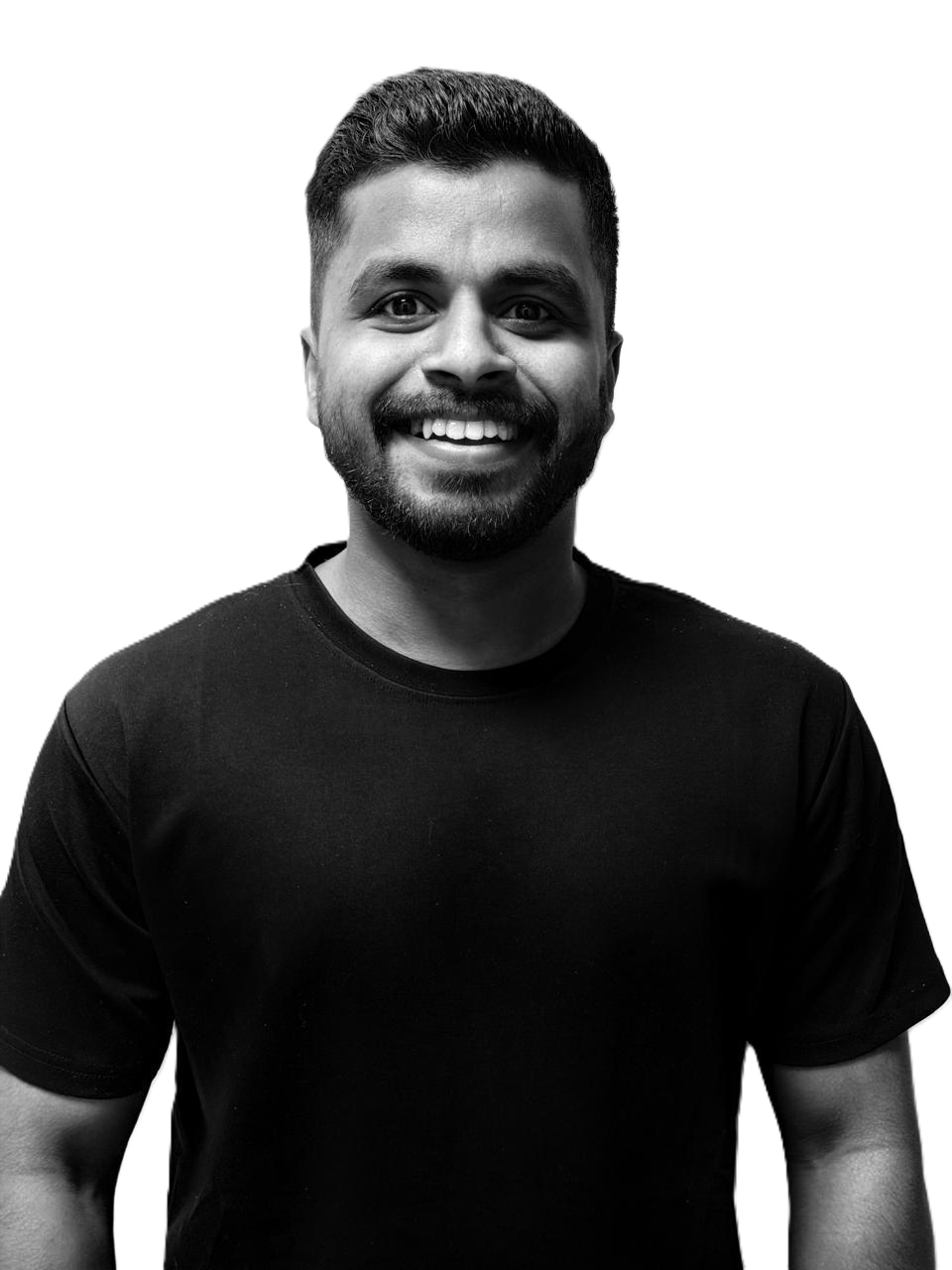
Jabir K
Digital marketing and AI marketing specialist with 6 years of UAE experience. Managed AED 1.8M+ in ad spend across Google, Meta, LinkedIn and Snapchat for luxury real estate, villa renovation, and citizenship-by-investment brands in Dubai.