How to Build a Personal Brand on LinkedIn as a Freelancer in Dubai
The short answer
Post two to three times a week about problems you actually solve, spend ten to fifteen minutes a day commenting on posts your future clients are reading, and make sure your profile proves the work rather than just describing it. That combination, done consistently for a few months, is what turns LinkedIn into an actual lead source for a freelancer, not virality and not a slicker headshot.
I get asked some version of this question every few weeks, usually by a freelancer who has a decent profile, posts occasionally, and cannot understand why nothing comes of it. The honest answer is almost always the same: the profile was built once and forgotten, the posting is too irregular for the algorithm to learn from, and there is no proof anywhere on the page that the work actually gets results.
None of that is hard to fix. It just takes a system rather than motivation, which is the part most guides skip.
Why LinkedIn Matters More Here Than Almost Anywhere Else
Dubai is an unusually good market for this. The UAE has one of the highest LinkedIn penetration rates in the world, with well over 9.5 million user accounts recorded in the country as of August 2026, a figure that includes a large share of the working population plus the expatriate professionals who make up most of the freelance client base here.
That matters specifically for freelancers because so much of Dubai's freelance economy runs on a licensed, solo-operator model rather than agencies with recognisable brand names behind them. When you do not have a company brand doing the trust-building for you, your profile has to do it. LinkedIn is where a huge share of B2B buying decisions in this market start, and for an independent professional it is close to the only channel where showing up consistently compounds instead of resetting to zero every time.
Get the Profile Fundamentals Right First
Posting into a weak profile wastes the traffic your posts generate. Fix the profile before you worry about content frequency.
Your headline should say who you help, not just your title
"Freelance Graphic Designer" tells a visitor nothing they can act on. "I design brand identities for Dubai F&B startups" tells them exactly whether to keep reading. Use the 220 characters you get for outcome and audience, not job title alone.
Write the About section for a client skimming on their phone, not a recruiter
Open with the problem you solve and who you solve it for, in the first two lines, because that is all most visitors read before deciding whether to expand the section. Save the career history for further down. A CV-style About section is the single most common reason a strong profile still does not convert.
Use the Featured section for proof, not a resume
Pin the things that show the work rather than describe it: a case study write-up, a before-and-after, a client testimonial, a dashboard screenshot with sensitive figures blurred. A profile full of claims with nothing to back them reads as junior even when the person behind it is not.
What LinkedIn's Algorithm Actually Rewards in 2026
According to Hootsuite's 2026 analysis of the platform, LinkedIn's ranking system is built to read the actual substance of a post rather than just its hashtags, and it prioritises what it calls knowledge content, posts that teach something or share a genuine insight, over promotional posts, which get suppressed. A well-written, useful post can also keep resurfacing to relevant people for days or weeks, so relevance matters more than how recently you posted.
Engagement quality outweighs audience size. Sprout Social's 2026 breakdown of the algorithm notes that a smaller, genuinely engaged following reads and comments in a way a much larger passive one never will, and that shows up directly in how far a post travels. Comments in particular carry more weight than likes or shares, so a handful of substantive comments will usually outperform a hundred quick likes.
There is also what LinkedIn's own team has described, reported by Buffer, as a golden hour effect: the platform shows a new post to a small test group first, and how that group responds in the first thirty to sixty minutes decides whether the post reaches a wider audience or quietly stops. That is a strong argument for posting when your actual audience is online, not at whatever time happens to be convenient for you.
On frequency, LinkedIn's own guidance, as reported by industry trackers like SocialBee, points to posting two to five times a week, including at least one or two videos once you have a rhythm, since the platform has recorded several consecutive quarters of double-digit growth in video uploads.
Worth remembering
None of these signals reward being loud. They reward being specific, being useful, and showing up on a pattern the algorithm can learn. A freelancer who writes two genuinely useful posts a week will outperform one who posts generic motivational content daily.
What to Actually Post as a Freelancer
Content that performs for freelancers tends to fall into a small number of repeatable pillars. Rotating through these removes the blank-page problem that kills most people's consistency.
- A problem you solve, explained plainly. Pick one recurring client problem and walk through how you think about it, without turning it into a sales pitch.
- Your process or point of view. How you approach a brief, what you check before quoting a project, what most people in your field get wrong.
- Local market commentary. A regulation, platform change, or cost shift that affects your specific niche in the UAE. This is the content type least available to AI tools and the one that signals real, current market knowledge.
- A public teardown. React to a publicly visible campaign, product, or page and explain what you would change and why, without naming or implying it is a client of yours.
- Genuine replies, not just posts. Ten to fifteen minutes a day commenting with an actual opinion on posts from people who could hire you or refer you does more for visibility than most people expect, and costs nothing to test.
Make Your Profile Match Your Paperwork
If you operate as a licensed freelancer under a Dubai Development Authority permit or a free zone freelance licence, say so somewhere on your profile, whether in the About section or a line in your Featured section. Clients in this market are increasingly checking whether the person they are about to pay is properly licensed before anything is signed, and a visible mention removes that question before a prospect has to ask it. It is a small detail that quietly does a lot of trust-building work for a solo operator without a company name behind them.
A 30-Day Checklist to Get Started
- Week 1: Rewrite your headline and the first two lines of your About section around a specific client problem, not a job title.
- Week 1: Add two to three pieces of proof to your Featured section, real work, blurred where necessary, not claims.
- Week 2: Draft your five content pillars and write down three post ideas under each, so you never start from a blank page.
- Week 2: Post your first two pieces, one teaching something, one showing your process, and time them for when your audience is realistically online.
- Weeks 2 to 4: Spend ten to fifteen minutes daily commenting on posts from people in your target client base, with a real opinion, not a one-line compliment.
- Weeks 3 to 4: Settle into two to three posts a week and track which pillar gets the most substantive comments, then do more of that one.
- Ongoing: Reply to every comment on your own posts within the first hour where possible, since that early engagement window is what decides how far a post travels.
Mistakes That Quietly Kill a Freelancer's LinkedIn Presence
- Bursts followed by silence. Posting daily for two weeks and then disappearing for a month resets any momentum the algorithm was building around your account.
- Pure self-promotion. A feed that is only "available for work" posts and service lists gets read as advertising and suppressed accordingly.
- Generic connection requests. A blank invite to someone you want to work with is a wasted first impression. One line about why you are connecting costs nothing and is remembered.
- Claims without proof. Saying you deliver results without a single example anywhere on the profile makes even true claims read as unverified.
- Treating comments as an afterthought. Ignoring the people who do engage on your posts is the fastest way to make sure they stop.
The Short Version
A personal brand on LinkedIn is not a redesigned profile picture and it is not a viral post. It is a profile that proves the work, a small set of content pillars you can return to without running out of ideas, and a habit of commenting that costs fifteen minutes a day. None of it is complicated. Almost none of it gets done consistently, which is exactly why it still works for the freelancers who actually stick with it.
Want a second opinion on your profile or content plan?
Send me your LinkedIn profile and I will tell you honestly what is holding it back. Message me on WhatsApp or connect on LinkedIn.
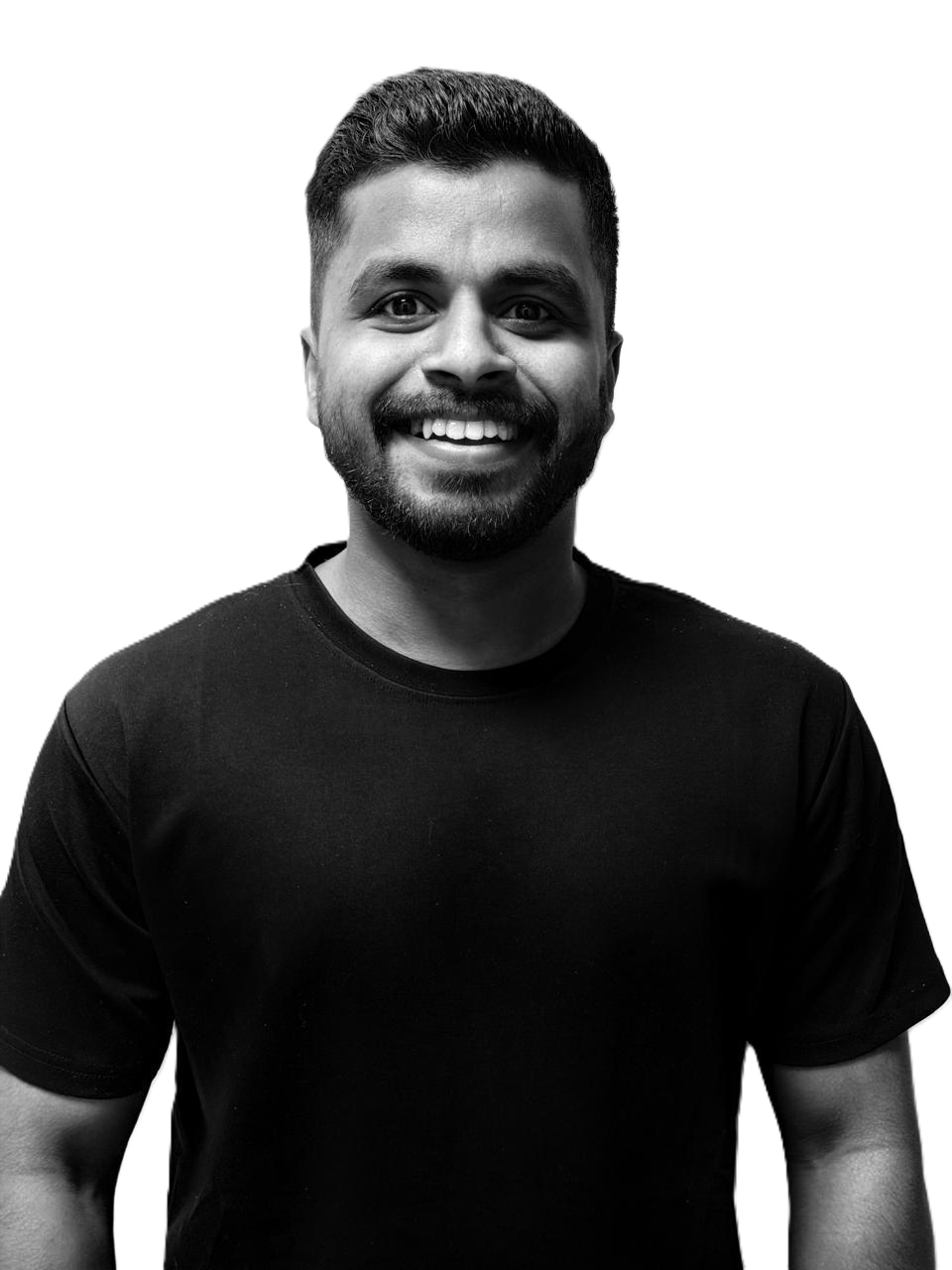
Jabir K
AI digital marketing consultant in Dubai with 6 years of UAE experience and roughly AED 1.8M in managed ad spend across Meta, Google, LinkedIn and Snapchat. Works with UAE SMEs on paid media, lead pipelines and AI search visibility.
- Hootsuite, How the LinkedIn Algorithm Works in 2026
- Sprout Social, How the LinkedIn Algorithm Works, updated for 2026
- Buffer, How LinkedIn's Algorithm Works in 2026, According to the LinkedIn Team
- NapoleonCat, Social Media Users in the United Arab Emirates, August 2026
- Dubai Development Authority (DDA), Freelancer License Registration guidance
Platform algorithms and features change frequently and the details here reflect their sources at publication. This is general guidance, not a guarantee of results.