AI Marketing Consultant in Dubai: What It Costs and What to Automate First
The short answer
An AI marketing consultant works out which parts of your marketing and sales process are worth automating, designs the workflow, implements it inside tools you already use, and measures whether it actually saved time or money. For a Dubai SME the realistic cost is AED 8,000 to 30,000 as a one-off setup plus AED 1,500 to 4,500 a month in subscriptions, or AED 4,000 to 15,000 a month on an ongoing retainer. The six-figure numbers you have seen quoted are enterprise software builds and almost never apply to a marketing problem.
If you have searched this before, you have probably run into a wall of numbers that made you close the tab. One widely cited UAE guide puts AI consulting costs between AED 147,000 and AED 1.4 million. Dubai agencies quote AI agent development from AED 55,000 for something simple to over AED 550,000 for a multi-step workflow system.
Those numbers are real. They are also answering a different question than the one you asked.
They price custom software development: building an AI system that does not currently exist, integrating it into core business infrastructure, and maintaining it. If you run a fit-out company, a clinic, a brokerage or a training institute in Dubai and you want your leads qualified faster and your content produced without three people touching it, you are not buying that. You are buying a rethink of how work moves through tools that already exist, and it costs an order of magnitude less.
This piece covers what the role actually is, what to automate first, what it genuinely costs in AED, how the process runs, and how to tell a competent consultant from someone reselling a subscription.
The gap this fills in the UAE right now
The UAE is the world's leading AI adopter. The Microsoft AI Diffusion Report for the first quarter of 2026 put national adoption at 70.1 percent of the working-age population against a global average of 17.8 percent, making it the first country past the seventy percent mark.
But that headline hides the part that matters commercially. Adoption by business size in the UAE is wildly uneven: roughly 65 percent among enterprises, 42 percent in the mid-market, and about 28 percent among SMEs. Meanwhile marketing and advertising is the leading function for UAE adoption at around 77 percent.
So the function where AI helps most is the one SMEs have adopted least. That gap is the whole opportunity, and it will not stay open. Broader data shows 68 percent of small and solo firms now using AI tools in some form, with those that have properly adopted automation reporting around a 25 percent increase in marketing ROI.
Why this matters in Dubai specifically
UAE consumers are unusually willing to act on AI. A PYMNTS study run with Visa Acceptance Solutions, fielded in March 2026, found 72 percent of UAE shoppers used AI during their most recent purchase. Your buyers have already changed how they research and decide. Most Dubai SMEs have not changed how they respond.
What an AI marketing consultant actually does
The title gets used loosely, so here is the honest version of the job, which is narrower and more useful than the marketing around it suggests.
- Diagnosis. Map how a lead currently travels from first impression to signed deal, and find where time and money leak. This is unglamorous process work and it is where most of the value is created, before any tool is opened.
- Prioritisation. Decide which of those leaks are worth automating, using cost of the fix against hours or revenue recovered. A good consultant talks you out of at least one thing you were excited about.
- Workflow design. Specify exactly what happens, in what order, with what trigger, and what a human still has to approve. Most failed automation projects fail here, not in the build.
- Implementation in tools you already have. CRM, ad platforms, forms, analytics, content tools. The skill is configuration and prompt design, not development.
- Training and handover. If the system only works while the consultant is in the room, nothing was delivered. Your team has to be able to run and adjust it.
- Measurement. Baseline before, measure after, in hours saved or cost per outcome. Without this you have bought a feeling.
What the role is not: building machine learning models, training custom systems on your data, or developing software. That is an AI engineer, and in Dubai they bill AED 200 to 550 an hour for good reason. Hiring one to fix a lead follow-up problem is like hiring a structural engineer to hang a shelf.
If you want the fuller breakdown of how this role differs from a traditional digital marketer, I covered that separately in what an AI marketing specialist in Dubai actually does.
What to automate first in a small business
Ordered by return on effort, not by how impressive it sounds in a proposal. The first three sit closest to revenue and need the least integration work.
| Priority | What it does | Typical effort | What you measure |
|---|---|---|---|
| 1. Lead capture and routing | Every enquiry lands in one place, deduplicated, assigned to the right person automatically | 1 – 2 weeks | Leads lost or duplicated |
| 2. Lead qualification and scoring | Enquiries ranked by fit before anyone calls, using form content and history | 2 – 3 weeks | Cost per qualified lead |
| 3. First-response speed | Instant acknowledgement plus internal alert so the best lead gets called first | 1 week | Time to first contact |
| 4. Content drafting | First drafts of posts, emails and ad variations produced in minutes, edited by a human | Ongoing | Hours per published piece |
| 5. Creative and copy testing | More ad variations tested per cycle, reducing creative fatigue | Ongoing | Cost per lead over time |
| 6. Reporting | Weekly numbers assembled and summarised without manual exports | 1 – 2 weeks | Hours per reporting cycle |
| 7. Pre-sales FAQ handling | Common questions answered instantly, with a clear route to a human | 2 – 4 weeks | Enquiries resolved without staff time |
Notice that numbers one to three are not really AI problems. They are process problems that AI makes easier to solve. That is true of most SME automation, and any consultant who skips straight to a chatbot has skipped the part that pays.
What not to automate
This matters more in the UAE than the adoption figures suggest. Research shared via the Dubai Center for AI found 67 percent of UAE consumers saying they trust AI systems, against a global average nearer 42 percent, while 87 percent still said they prefer a human over a bot. Both things are true at once. People are comfortable with AI in the process and still want a person at the point of decision.
So leave these alone:
- The closing conversation. High-value UAE purchases close on trust. Automate what happens before it, never the call itself.
- Complaints and anything that has gone wrong. An automated response to a frustrated client converts a problem into a story about your company.
- Anything with pricing authority. If a system can quote, it can quote wrong, and you will honour it.
- Anything a customer would be annoyed to discover was automated. That is the practical test, and it is a better guide than any policy.
What it actually costs in Dubai
Four tiers, and most SMEs belong in the first two. Figures are compiled from published UAE automation pricing and small business marketing automation benchmarks, cross checked against what SMEs here actually spend.
| Tier | What you get | Setup (one-off) | Monthly |
|---|---|---|---|
| DIY inside existing tools | AI features in software you already pay for, plus one or two subscriptions | None | AED 200 – 1,800 |
| Consultant-led setup | Audit, workflow design, implementation, team training, measurement framework | AED 8,000 – 30,000 | AED 1,500 – 4,500 in tools |
| Ongoing advisory retainer | Monthly optimisation, new workflows, performance reporting | Included | AED 4,000 – 15,000 |
| Custom build | Bespoke agent or system development, integrations, governance | AED 55,000 – 550,000+ | AED 3,000 – 90,000+ |
Two reference points for the ranges. One Dubai automation agency publishes AED 12,000 as the honest floor for a genuine automation project, and puts mature per-client tool stacks at AED 1,500 to 4,500 monthly before token costs. Separately, small business benchmarks put marketing automation software at roughly AED 180 to 1,850 per month, with first-year total cost of ownership including setup, integration, data cleanup and training landing between about AED 5,500 and AED 55,000.
That last figure is the one worth sitting with. The subscription is never the cost. Data cleanup and integration are.
The costs nobody quotes you
- Data cleanup. If your CRM is full of duplicates and half-filled records, automation propagates the mess faster. This is often the largest single line item and it is always underestimated.
- Integration. Connecting a form, a CRM and an ad platform sounds trivial until one of them has no usable API.
- Token and usage costs. Small at SME volume, but genuinely variable, so it belongs in the budget rather than the footnotes.
- Team time during rollout. Real hours, from people who already have jobs.
- Maintenance. Platforms change. A workflow left untouched for a year is usually broken in at least one place.
How to work out whether it is worth it
Do this before you speak to anyone. It takes fifteen minutes and it is the single most useful thing in this article.
- List the marketing and sales admin tasks your team repeats weekly.
- Estimate hours per week for each, honestly.
- Multiply by a fully loaded UAE staff cost of roughly AED 150 to 300 per hour, which accounts for salary, visa, insurance and overhead rather than just salary.
- Multiply by 52 for the annual cost of each task.
- Assume automation removes about half of it, not all of it. Conservative estimates survive contact with reality.
- Compare to setup plus twelve months of subscription.
A task consuming five hours a week at AED 200 an hour costs about AED 52,000 a year. Halving it saves AED 26,000, which comfortably justifies a AED 15,000 setup. A task consuming ninety minutes a week does not, no matter how irritating it is. Automate the expensive boring thing, not the annoying small thing.
One more angle worth checking: UAE SME grant programmes cover a share of qualifying technology investment, with awards reported in the AED 50,000 to 200,000 range and coverage around 30 to 50 percent. Whether your project qualifies depends on structure and alignment with national strategy, so treat it as worth investigating rather than assumed.
The process: what 90 days actually looks like
Any engagement promising transformation in two weeks is selling you a subscription. A realistic SME project:
- Weeks 1 to 2, audit and baseline. Map the current process end to end. Measure what things cost now in hours and money. Agree what success means numerically before anything is built.
- Week 3, prioritisation. Rank opportunities by return on effort. Pick two or three. Reject the rest explicitly, in writing, with reasons.
- Weeks 4 to 5, design. Specify each workflow: triggers, steps, decision points, human approval gates, failure handling. Get sign-off before building.
- Weeks 6 to 9, build and test. Implement in existing platforms. Run in parallel with the manual process rather than replacing it, so failures are visible before they cost you a lead.
- Week 10, training and handover. Documentation your team can actually follow, plus a named internal owner.
- Weeks 11 to 13, measure and iterate. Compare against the week-one baseline. Fix what underperformed. Decide what is next.
If a proposal you receive has no baseline measurement step, that is the flaw to press on. Without it, nobody can prove the project worked, which is convenient for whoever sold it.
Who can actually do this in Dubai
There are three kinds of provider and they are not interchangeable.
AI development agencies build custom systems. Genuinely necessary when you need software that does not exist, priced accordingly, and overkill for most marketing problems.
Full-service marketing agencies increasingly offer AI as a line item. Good when you also need ongoing channel execution, though the AI component is often a tool subscription with a markup rather than a process redesign.
Independent consultants sit between the two: process diagnosis, workflow design, implementation in existing tools, and training. Best fit when you have a team already and need to make it more effective rather than replace it.
Questions worth asking before you sign
- What will you measure, and what is our baseline today?
- Which parts of this run inside tools we already pay for?
- What happens if a workflow fails at 2am, and who finds out?
- Who owns and can edit this after handover?
- What are you recommending we do not automate, and why?
That last one is the most revealing question you can ask. Anyone who cannot name something they would leave manual is selling, not consulting.
Red flags
- A quote with no discovery. Nobody can price this accurately without seeing your process.
- Custom development proposed for a workflow that three mainstream tools already handle.
- Guaranteed percentage improvements before any baseline exists.
- No mention of data cleanup, which means it has not been costed.
- Deliverables described only as tools, with no process change attached.
AI for marketers: what has actually changed in the job
Worth separating from the automation question, because this is about the person doing the work rather than the system.
The genuine shifts, in my own practice:
- Volume of testing. The constraint on ad creative used to be production time. It is now judgement about what is worth testing. More variations per cycle directly slows the creative fatigue that drives UAE lead costs up, which I unpacked in the realistic cost per lead in Dubai.
- Research and analysis speed. Competitor teardowns, keyword clustering and audience research that took a day take an hour, which changes how often they get done at all.
- A new discovery surface. Buyers now ask AI tools for recommendations, so being cited by those tools is a channel in its own right. That is a separate discipline, covered in how to get your Dubai business cited by ChatGPT and AI Overviews.
- Prompt design as a real skill. The gap between a vague prompt and a well-structured one with context, constraints and examples is the difference between generic output and something usable. This is learnable and it is where most of the practical advantage sits.
- Editing matters more, writing matters less. Draft generation is close to free. Judgement about what is true, on-brand and worth publishing is the scarce part, and it is the part clients pay for.
What has not changed: strategy, positioning, understanding a specific market, and knowing which number actually matters. AI accelerates execution. It does not supply direction, and marketers who lean on it for direction produce a great deal of confident, forgettable work.
Where I fit, and where I do not
Since this post is effectively an argument for hiring someone like me, it is worth being precise about the boundaries.
I work on the marketing side: diagnosing where leads leak, designing qualification and follow-up processes, implementing inside CRM and ad platforms, applying AI to campaign work and content production, and building visibility in AI search. Six years in the UAE across roughly AED 1.8 million in managed ad spend, with a prompt engineering certification from IIT Madras behind the AI side of it. Results I can point to include a 25 percent reduction in cost per lead on a property and citizenship advertiser, an 18 percent lift in landing page conversion rate, and a number one position in Gemini's AI overview for a Dubai villa renovation brand's core commercial query.
What I do not do is custom software development. I do not build bespoke agents, train models, or write production systems. If your problem genuinely requires that, you need a development agency and I will tell you so rather than stretch the scope. In my experience most Dubai SMEs asking about AI automation do not need one, and the ones who were quoted six figures were being sold a solution two sizes too large.
Frequently asked questions
What does an AI marketing consultant do?
They work out which parts of your marketing and sales process are worth automating, design the workflow, implement it inside tools you already use, train your team, and measure the result. It is a marketing role that uses AI, not a development role that builds AI.
How much does AI marketing automation cost for a small business in Dubai?
AED 200 to 1,800 per month staying inside existing tools, or roughly AED 8,000 to 30,000 one-off for a consultant-led setup plus AED 1,500 to 4,500 monthly in subscriptions. Ongoing retainers commonly run AED 4,000 to 15,000 monthly. The published six-figure UAE figures are enterprise custom builds.
What should a small business automate first?
Lead capture and routing, then qualification and scoring, then first-response speed. These sit closest to revenue, need the least integration work, and show a measurable result within weeks. Content drafting and reporting follow.
Is it worth it for a small business in the UAE?
Calculate rather than assume. Hours per week multiplied by a fully loaded UAE cost of AED 150 to 300 per hour, times 52, halved for realism, compared against setup plus a year of subscription. Under two hours a week rarely justifies a build. A day a week almost always does.
Do I need a custom AI agent?
Almost certainly not for a marketing problem. Custom agent development in Dubai starts near AED 55,000 for a single-task agent and runs past AED 550,000 for multi-step systems. Build custom only when the workflow is proprietary or touches regulated data.
How long does a project take?
About 90 days for a focused SME engagement: two to three weeks of audit and design, four to six weeks of build and testing, then a month of measurement and iteration.
Consultant, agency, or developer?
A consultant when the problem is deciding what to automate and how to measure it. An agency when you need ongoing multi-channel execution. A developer only when you need software that does not exist yet.
What should never be automated?
The closing conversation, complaint handling, anything with pricing authority, and anything a customer would be annoyed to discover was automated. UAE research shows 67 percent of consumers trust AI systems while 87 percent still prefer a human, so automate behind the scenes and keep a person at the front.
The short version
Most Dubai SMEs looking at AI are quoted for the wrong thing. The enterprise numbers in circulation price custom software, while the actual opportunity is process redesign inside tools you already own, at a fraction of the cost.
Start with the three workflows nearest your revenue, measure a baseline before you change anything, automate the expensive boring tasks rather than the annoying small ones, and keep a human at every point where a customer is deciding whether to trust you.
Not sure which tier you belong in?
Tell me the two or three tasks eating the most time in your marketing each week and roughly what your team costs, and I will tell you which are worth automating, which are not, and what the realistic range looks like for your situation. If the honest answer is that you do not need a consultant, I will say that. Message me on WhatsApp or LinkedIn.
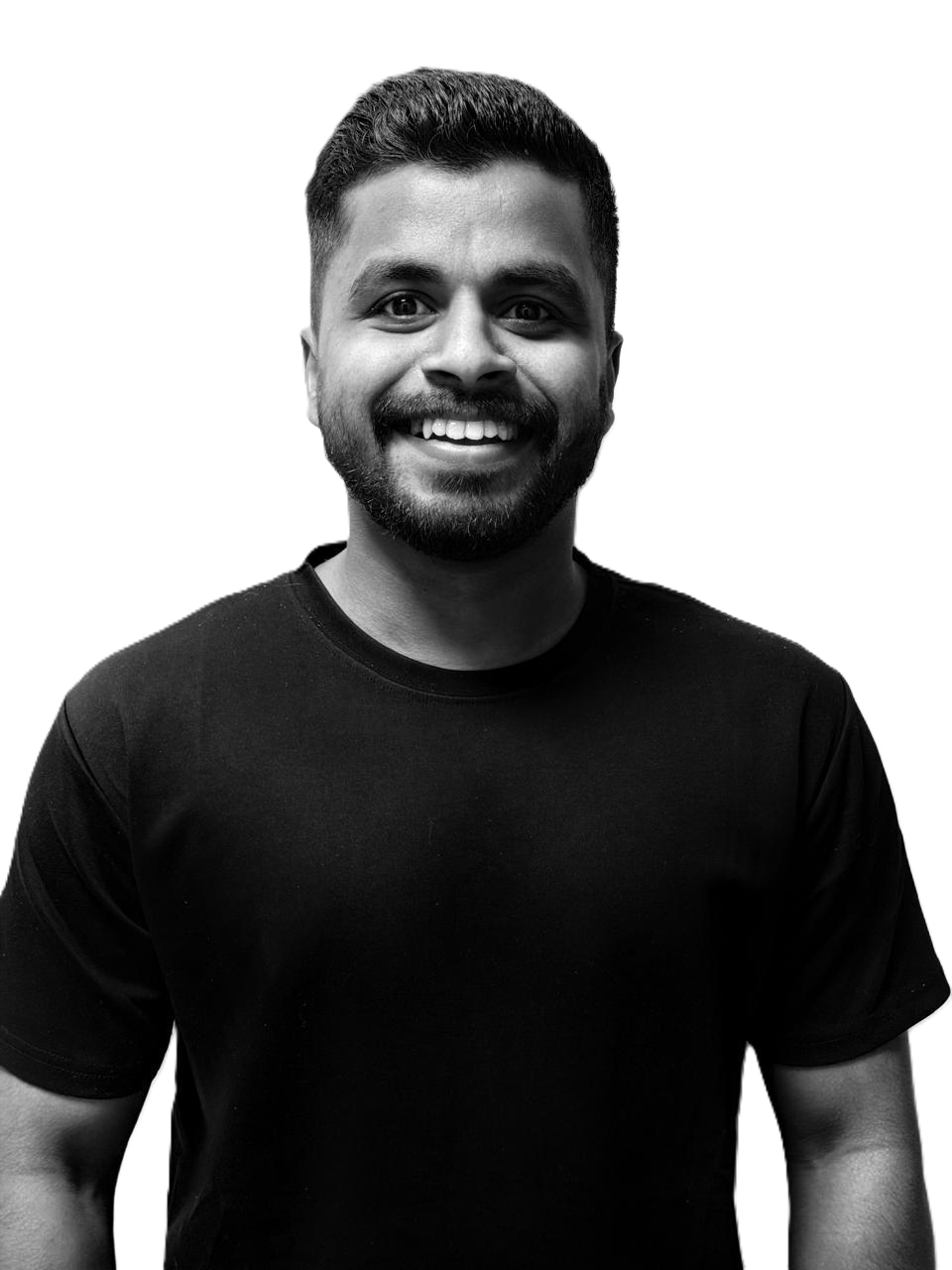
Jabir K
AI digital marketing consultant in Dubai with 6 years of UAE experience and roughly AED 1.8M in managed ad spend. Prompt engineering certified through IIT Madras. Works with UAE SMEs on lead pipelines, paid media and AI search visibility.
- Microsoft AI Economy Institute, AI Diffusion Report, Q1 2026
- PYMNTS Intelligence with Visa Acceptance Solutions, UAE Playbook, fielded March 2026
- Dubai Center for AI via Dubai Protocol Office, UAE consumer trust in AI
- Konvergense, UAE AI adoption by business size and function, 2026
- Innovatrix Infotech, AI automation cost in Dubai in AED, updated August 2026
- NomadX, AI agent development cost in Dubai and the UAE, 2026
- Appinventiv, UAE AI consulting cost ranges, 2026
- Zylo Lab, AI marketing automation cost for small businesses, 2026
- HireDeveloper.ae, UAE AI engineer and contract rate guide, 2026
Ranges are indicative market estimates. Currency conversions are approximate and pricing moves quickly in this category.